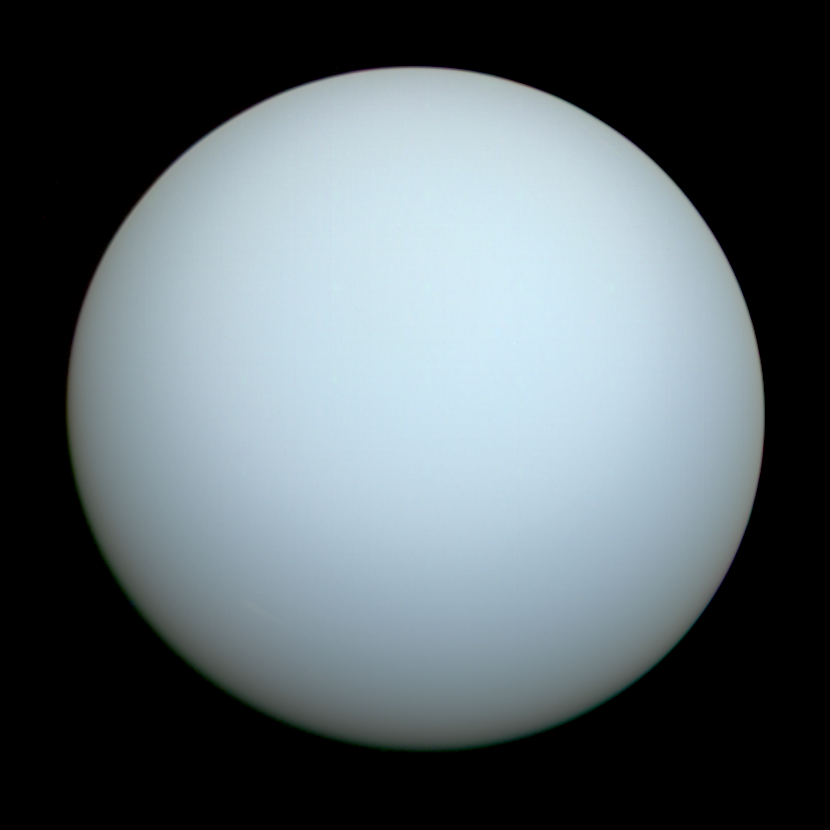
Uranus Images: Unveiling the Blue-Green Ice Giant for Education
The cosmos holds countless wonders, each celestial body telling a unique story through its visual characteristics. Among them, Uranus stands out as a true enigma – a distant ice giant renowned for its ethereal blue-green hue and subtle yet fascinating ring system. For educators, students, and astronomy enthusiasts alike, high-quality **planet Uranus images** are invaluable tools, transforming abstract concepts into tangible, inspiring visuals that captivate the imagination and deepen understanding. These captivating images serve as windows into a world billions of kilometers away, offering a glimpse of one of our solar system's most peculiar and beautiful residents.
From its peculiar axial tilt to its unique atmospheric composition, Uranus presents a rich tapestry of scientific discovery waiting to be explored. Visual resources are paramount in making these complex astronomical phenomena accessible and engaging. Imagine illustrating the concept of an ice giant without a vivid depiction of its serene, aqua-tinted atmosphere, or explaining the existence of planetary rings without showcasing their delicate structure against the backdrop of space. This article delves into the visual appeal and educational significance of Uranus images, guiding you through their characteristics, their utility in learning, and where to find the best visual assets.
The Allure of Uranus: A Blue-Green Canvas in Space
What immediately strikes observers looking at **planet Uranus images** is its distinctive blue-green color. This captivating shade isn't arbitrary; it's a direct result of methane gas in its upper atmosphere. Methane absorbs red light from the sun while reflecting blue and green wavelengths, giving the planet its characteristic oceanic appearance. Unlike the vibrant reds of Mars or the stormy swirls of Jupiter, Uranus presents a remarkably uniform, serene, and almost featureless disk, often described as having a "mysterious atmosphere" that beckons further study.
This uniform appearance, however, belies a dynamic and frigid world. As an "ice giant," Uranus is composed primarily of a hot, dense fluid of "icy" materials – water, methane, and ammonia – above a small rocky core. Its immense distance from the Sun contributes to its extremely cold temperatures, often making it the coldest planet in our solar system. Visual representations effectively convey this sense of an icy, distant realm, distinguishing it from the gas giants like Jupiter and Saturn. In educational settings, comparing and contrasting these visual characteristics helps students grasp the diverse compositions and atmospheres found within our solar system.
Unveiling Uranus's Distinctive Rings
While not as famously opulent as Saturn's majestic bands, Uranus also boasts its own system of rings – a feature often highlighted in detailed **planet Uranus images**. These rings are darker and narrower than Saturn's, composed primarily of ice and rock particles, some as large as boulders, others as fine as dust. Discovered in 1977, they were initially observed through occultation (when the rings blocked the light of a distant star). Today, advanced imaging, particularly from the Hubble Space Telescope and the Voyager 2 spacecraft, reveals these rings with increasing clarity.
In photographs, Uranus's rings typically appear as faint, slender arcs, adding a subtle complexity to the planet's otherwise smooth facade. The images often emphasize their unique arrangement, perpendicular to the planet's orbit around the Sun due to Uranus's extreme axial tilt of nearly 98 degrees. This extraordinary tilt means that Uranus essentially orbits on its side, making its ring system appear vertical from certain perspectives – a truly unique visual lesson in planetary dynamics. High-resolution images allow for a detailed examination of individual rings, their varying brightness, and their intricate structure, providing tangible evidence of ongoing planetary evolution.
Why Planet Uranus Images Are Essential for Education
In an age where visual learning is paramount, **planet Uranus images** are indispensable educational assets. They transform abstract scientific concepts into concrete, relatable visuals, making complex astronomical principles accessible to a wider audience, from elementary school students to advanced university researchers.
1. **Sparking Curiosity:** A vivid image of the blue-green planet, complete with its subtle rings against a star-studded backdrop, instantly captures attention. It inspires questions: "Why is it blue-green?" "What are those rings made of?" "Why is it tilted?" This natural curiosity is the first step towards deeper scientific inquiry.
2. **Facilitating Understanding:** Concepts like methane absorption, axial tilt, and the composition of ice giants can be challenging to grasp through text alone. Images provide immediate visual context, clarifying these ideas and aiding retention. Seeing the planet's tilt or the faintness of its rings makes these facts much more memorable.
3. **Enhancing Engagement:** Interactive lessons, presentations, and digital textbooks come alive with high-quality imagery. Students are more likely to engage with material that is visually stimulating, leading to more productive learning experiences.
4. **Promoting Critical Thinking:** Analyzing different images of Uranus – perhaps taken at various wavelengths or by different instruments – can lead to discussions about observational techniques, data interpretation, and the limitations of what we can "see" from Earth.
From Textbooks to Digital Displays: Maximizing Impact
Educators can integrate **planet Uranus images** into their curriculum in myriad ways to maximize their impact:
* **Presentations:** Utilize high-resolution images to illustrate lectures on planetary science, atmospheric composition, or the history of space exploration. Zoom into details like cloud bands or ring structures.
* **Interactive Assignments:** Task students with identifying features in images, comparing Uranus to other planets, or even creating digital posters or presentations using provided visuals.
* **Virtual Field Trips:** Use panoramic or 3D renderings (where available) to take students on virtual journeys around Uranus, exploring its poles, equator, and ring plane.
* **Discussion Prompts:** Show an image and ask open-ended questions: "What does this image tell us about Uranus?" "How does it compare to Earth?" "What questions does it raise for you?"
* **Art and Science Integration:** Encourage students to draw or paint their interpretations of Uranus based on the images, blending scientific observation with artistic expression.
Navigating the Galaxy of Uranus Images: Finding the Perfect Shot
Finding the right **planet Uranus images** for your educational project or personal interest is easier than ever, thanks to the vast digital repositories available today. Whether you're looking for free resources or premium, high-resolution stock photos, several excellent platforms exist.
Major stock photo websites, such as Getty Images, offer extensive collections. You can
discover 1700+ high-res Uranus stock photos for projects, providing a wide array of authentic, professional-grade images. These often include shots derived from real spacecraft data (like Voyager 2) or sophisticated artistic interpretations based on scientific models. Such platforms are ideal for commercial use, professional publications, or when specific resolutions and licensing options are required.
For those on a budget or seeking images for personal, non-commercial, or educational use, numerous websites provide free stock photos. You can
explore free and high-resolution Uranus planet images on platforms like Freepik, FreeImages, and public domain archives from NASA or ESA. When searching, use specific keywords like "planet Uranus," "Uranus rings," "blue-green planet," or "Uranus atmosphere" to refine your results. Always double-check the licensing terms for any image, even free ones, to ensure compliance with copyright laws for your intended use. Look for images that clearly depict the planet's signature blue-green color and, if visible, its intriguing ring system and faint cloud details.
Beyond the Visuals: Key Facts to Complement Uranus Images
To fully appreciate the educational value of **planet Uranus images**, it's crucial to pair them with compelling facts. Here are some key points that enhance any visual presentation:
* **Discovery:** Uranus was the first planet discovered with a telescope by William Herschel in 1781, initially mistaken for a comet.
* **Axial Tilt:** Its extreme axial tilt of 98 degrees means it essentially orbits the Sun on its side, leading to highly unusual seasons, with each pole experiencing 42 years of continuous sunlight followed by 42 years of darkness.
* **Rotation:** It has a retrograde rotation, spinning in the opposite direction to most other planets, though not as pronounced as Venus.
* **Moons:** Uranus has 27 known moons, named after characters from Shakespeare and Alexander Pope. The five largest are Miranda, Ariel, Umbriel, Titania, and Oberon. Miranda, in particular, has a strikingly varied and chaotic surface.
* **Voyager 2:** The only spacecraft to have visited Uranus was NASA's Voyager 2, which made its closest approach in 1986, providing humanity with its first detailed close-up images and data.
These facts, when presented alongside stunning visuals, help paint a comprehensive picture of Uranus, solidifying its place as a truly unique and significant member of our solar system.
In conclusion, **planet Uranus images** are far more than just pretty pictures of a distant world. They are powerful educational tools that bring the mysteries of our solar system into classrooms and homes, fostering curiosity, understanding, and a deeper appreciation for the wonders of astronomy. By leveraging high-quality visuals of this distinctive blue-green planet and its enigmatic rings, educators and enthusiasts alike can unlock new dimensions of learning and inspire the next generation of space explorers and scientists. The silent beauty of Uranus, captured in a photograph, continues to speak volumes about the vast, diverse, and endlessly fascinating universe we inhabit.